Crazy Hiking Lady Graphics for Crafts Projects
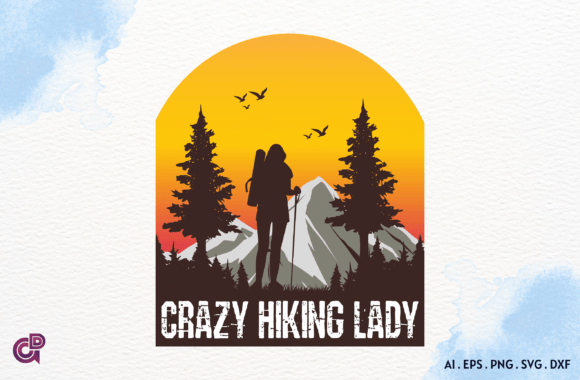
As a graphic designer who’s built brand identities for outdoor apparel startups, handmade soap lines, and seasonal Etsy collections, I recently evaluated Crazy Hiking Lady for a real client project: a boutique trail-running gear brand launching its first limited-edition capsule collection. The goal? A cohesive set of social media graphics, reusable tote bag designs, and printable event posters for a local “Women Who Wander” hiking meetup series. Here’s how Crazy Hiking Lady held up—not as a novelty clipart piece, but as a functional, commercially viable graphic design asset.
A First Impression That Lands with Energy—and Intention
Opening the file, I immediately noticed the confident line work, expressive posture, and playful yet grounded energy. This isn’t generic cartoon clipart—it’s an illustration with rhythm: wind-swept hair, hiking poles mid-swing, backpack straps taut, boots planted like they’ve just crested a ridge. The style sits comfortably between modern design and hand-drawn charm—ideal for brands that want authenticity without sacrificing polish. It reads as adventurous, inclusive, and unapologetically joyful—perfect for a handmade business or small business branding that leans into personality over perfection.
Where It Shines in Real Client Work
Crazy Hiking Lady excels where visual storytelling meets practical application. On product mockups—especially for t-shirts, mugs, and canvas totes—the illustration holds presence without overwhelming. Its balanced negative space allows it to breathe on textured fabrics or matte paper stock. As a sublimation design, it translates cleanly across polyester blends. In packaging design, it works beautifully as a central hero graphic on kraft boxes or as a repeating motif along seam tape. For social media graphics, it anchors Instagram carousels and Pinterest pins with instant thematic clarity—no headline needed.
It also integrates seamlessly into Canva templates and Cricut projects. I tested it in layered SVG format (confirmed editable paths) and high-res PNG with alpha transparency—both performed flawlessly when resized for sticker sheets or vinyl decals. As a sticker design, it conveys attitude at 2" scale; as a printable design, it holds detail even in 8x10" wall art prints. For editorial design—think blog headers or newsletter banners—it adds warmth and narrative without competing with body copy.
Smart Use Cases Across Mediums
- Hero graphics for landing pages or campaign banners
- Product mockups for print-on-demand platforms (Redbubble, Teespring, Printful)
- Themed collections—pair with mountain silhouettes, trail maps, or wildflower accents
- Packaging details—stamp-style placement on tags, labels, or tissue paper
- Digital ads where quick emotional resonance matters more than literal realism
- Etsy product visuals that signal craft, movement, and community
Where Caution Is Warranted
This isn’t a universal-fit asset. At under 1" width, fine details—like pole grips or backpack stitching—blur. Avoid using Crazy Hiking Lady in dense layouts with competing icons or tight text blocks; its expressive nature needs breathing room to support, not disrupt, visual hierarchy. It’s intentionally vibrant and gestural—so it won’t align with minimalist branding systems or corporate wellness programs aiming for clinical calm. Likewise, on low-contrast backgrounds (e.g., light gray over off-white), legibility suffers unless a subtle drop shadow or outline is added.
Design Judgment: Trust, Tone, and Technical Readiness
What makes Crazy Hiking Lady feel trustworthy for client work isn’t just charm—it’s consistency. The proportions are anatomically believable, the motion feels kinetic but controlled, and the expression lands as determined, not chaotic. That builds visual trust—critical when representing a brand’s values. Emotionally, it invites engagement without infantilizing its audience. For a female-led hiking co-op or eco-conscious apparel line, it signals alignment before a single word is read.
Professionally, I ran standard checks: printed test swatches on both glossy and natural cotton; previewed in black-and-white to confirm silhouette strength; layered it over photo backgrounds to assess contrast ratios; and dropped it into Figma alongside serif, sans serif, script, and display fonts—it paired strongest with friendly sans serifs (like Poppins or Nunito) and earthy handwritten styles.
Practical Designer Notes Before Deployment
- Verify file formats included—ideally SVG (for infinite scalability), high-DPI PNG (300ppi+), and layered PSD if editing flexibility is needed.
- Test transparency: drag the PNG onto dark and light mockups to ensure clean edges and no haloing.
- Check licensing: confirm it includes a broad commercial license covering POD, digital resale, and client deliverables—not just personal use.
- Preview at 50%, 100%, and 200% scale in your design tool to spot pixelation or path distortion.
- Compare against your brand’s color palette—its inherent warmth may require minor hue adjustments for perfect harmony.
- Run a quick accessibility check: does it retain meaning when desaturated? Does it pass contrast minimums against common background colors?
In the end, Crazy Hiking Lady earned its place in my active design bundle not because it’s “cute”—but because it solves real problems: injecting narrative into marketing visuals, adding human-centered energy to product mockups, and giving creative marketplace sellers a distinctive, licensable anchor for themed campaigns. Whether you’re building a full brand identity, designing for a local festival, or sourcing assets for a digital product launch, this illustration delivers more than decoration—it delivers direction.