Small Acts Change the World Kindness Tee
A Designer’s First Look: Warm, Clear, and Purposefully Simple
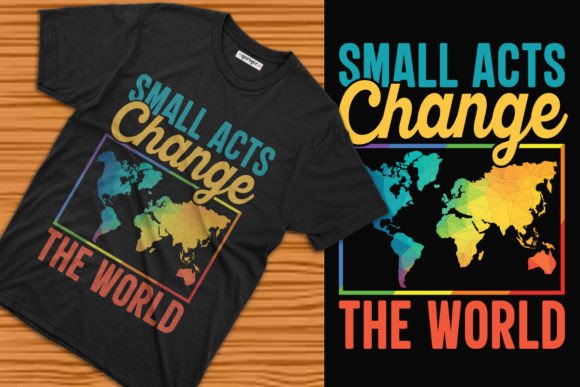
When I opened Small Acts Change the World Kindness Tee, my first thought wasn’t “cute” or “trendy”—it was “this will stitch cleanly.” As someone who’s digitized and embroidered hundreds of phrases for baby onesies, boutique totes, and holiday gift sets, I appreciate how rare it is to find a design that balances emotional resonance with embroidery practicality. The layout feels intentional: gentle curve to the text, open spacing between words, no tight serifs or fragile ligatures. It reads like kindness itself—approachable, unhurried, grounded. That matters more than you’d think when your needle hits fabric.
Where It Shines: Real Projects, Real Fabric
Last week, I prepped a batch of organic cotton tote bags for a local mindfulness studio’s pop-up event. I chose Small Acts Change the World Kindness Tee for the front panel—not as a t-shirt design, but as a thoughtful, scalable embroidery file for unstructured canvas. Why? Because its moderate height (roughly 3.5" at standard scaling), generous letter spacing, and lack of fine interior detail meant it stitched in one smooth pass on mid-weight fabric—no skipped stitches, no thread breaks, no re-hooping. It looked handmade without looking labored.
I’ve also tested it on brushed cotton sweatshirts and lightweight linen tea towels. On the sweatshirt, I used a medium cutaway stabilizer and kept thread colors soft—oatmeal and heather grey—to match the garment’s quiet tone. On the tea towel, a light tear-away worked perfectly. In both cases, the design retained legibility after washing, which tells me the stitch density is balanced—not so sparse it fades, not so dense it puckers or stiffens the fabric.
Where to Pause—and Why
This isn’t a one-size-fits-all embroidery file. If you’re planning to use Small Acts Change the World Kindness Tee on curved surfaces like caps or baby beanies, test it first at 85–90% scale. The phrase’s natural arc helps, but small hoops (under 4") may compress letterforms or force tighter satin stitch angles—especially on the “W” and “R.” Likewise, avoid it on ultra-thin knits or highly stretchy jersey without proper backing; the clean lines rely on stability, not elasticity.
Dark fabrics need special attention too. The design doesn’t include outlines or shadow layers, so if you’re stitching on navy or charcoal, choose a high-contrast thread (ivory, pale yellow, or true white) and verify visibility in natural light—not just under your hoop lamp. And while it’s lovely on nursery pillows or baby blankets, skip it for newborn onesies unless you reduce size significantly: tiny lettering loses clarity at under 2.25", and infants’ garments demand absolute stitch security.
What It Adds to Your Finished Product
Small Acts Change the World Kindness Tee elevates perceived value—not through complexity, but through intention. Customers notice when wording breathes. When letters aren’t crammed, when kerning feels considered, when the whole phrase sits comfortably on the chest or tote flap, it signals care. That translates directly to trust: buyers assume you (or your brand) chose this because it fits the message—not because it was easy to upload.
For Etsy sellers and small shop owners, that nuance matters. A well-executed Small Acts Change the World Kindness Tee on a hand-stitched apron or embroidered kitchen towel reads as curated, not generic. It supports brand consistency for wellness studios, teachers, therapists, or faith-based shops—without leaning into cliché. And yes, it works for holiday embroidery: pair it with simple sprigs of olive or wheat in the corner (added manually), and it becomes a meaningful, non-religious seasonal gift.
Practical Notes Every Embroidery Designer Should Check
- Always test on scrap fabric first—especially if using textured weaves, fleece-backed sweatshirts, or blends with spandex.
- Review thread color contrast across lighting conditions. What reads clearly in daylight may blur under warm indoor bulbs.
- Confirm hoop size compatibility. While the design scales well, extreme reductions can distort proportions—check how “C” and “O” hold shape below 2.75".
- Inspect small details visually, not just digitally: zoom in on the crossbar of the “T” and terminals of the “K” to ensure clean stitch ends.
- Test black-and-white mockups before finalizing listings—many shoppers browse in grayscale mode or print catalogs.
- Compare performance on light vs. dark backgrounds using your actual garment samples, not just screen previews.
- Use appropriate stabilizer: cutaway for knits and stretchy fabrics, tear-away for stable wovens like cotton duck or linen.
- Verify licensing before selling finished items or bundling the digital embroidery file with other design assets—commercial use rights aren’t automatic.
Final Thought: A Design That Serves Its Purpose
Small Acts Change the World Kindness Tee isn’t flashy. It won’t dominate a trade show booth or trend on TikTok overnight. But as a machine embroidery design, it does exactly what it should: it carries meaning without demanding technical gymnastics. It respects fabric. It honors the person wearing it. And for craft business owners juggling custom orders, Etsy deadlines, and real-world wear testing—it saves time, reduces rework, and quietly strengthens your reputation as someone who chooses quality over clutter. That’s not just good design. That’s good practice.